

The PASS school safety guidelines are a free, US framework that helps schools plan safety one layer at a time. They don’t tell schools what to buy. Instead, they show what to fix first and how to improve in sensible, affordable steps.
Australia and the Philippines have their own rules, and nothing here replaces them. Still, the PASS approach is useful anywhere a school leader has a limited budget and a long list of risks. This guide explains how PASS works and four lessons worth borrowing, especially for emergency alerts.
What are the PASS school safety guidelines?
PASS stands for the Partner Alliance for Safer Schools. The Security Industry Association and the National Systems Contractors Association formed it in 2014. It brings together people from education, public safety and the security industry.
The guidelines are now in their 7th edition, released in 2025. The US government also lists them on SchoolSafety.gov, its federal school safety website.
PASS is vendor-neutral, so it never recommends brands. In fact, one of its stated aims is to help schools tell real needs apart from sales pitches. That independence is a big reason the framework is trusted.
The five layers of school safety in PASS
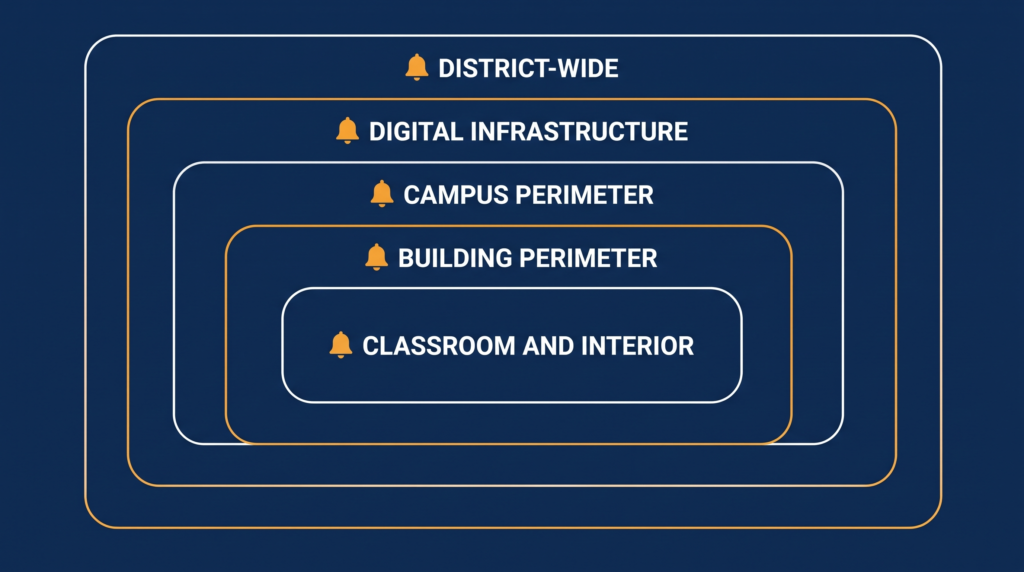
PASS looks at a school from the outside in, so each layer is a ring of protection:
- District-wide: policies, training and systems shared by every school.
- Digital infrastructure: cybersecurity and connected systems, new in the 7th edition.
- Campus perimeter: grounds, car parks and outdoor areas.
- Building perimeter: entries, visitor management and exterior doors.
- Classroom and interior: rooms, corridors and shared spaces.
In every layer, PASS reviews the same components. These include policies, people and training, building design, communication, access control, video, and detection and alarms.
How PASS tiers phase school safety work
Within each layer, the PASS school safety guidelines sort measures into four tiers. Tier 1 is the baseline that every school should aim for, whatever its size or budget. Higher tiers add more capability.
However, a higher tier isn’t automatically better. Schools move up as their risk assessment and funding allow. As a result, a small rural school and a large city campus can both follow PASS in a way that suits them.
Lesson 1: Get the basics right before buying technology
The Tier 1 items are surprisingly simple. For example, they include running lockdown drills, keeping occupied classrooms locked, and training staff to raise an alarm. The 7th edition also moved classroom doors that lock from the inside up to Tier 1.
So start with people and procedures. A school with clear roles, practised drills and lockable doors is safer than one with costly equipment and no plan.
Lesson 2: Every layer needs a way to raise the alarm
Alerts appear throughout the PASS checklist, not in one place. At Tier 1, PASS lists a panic alarm in each building and each classroom, plus staff training to use it. From Tier 2, it extends alarms to outdoor and green spaces. Higher tiers then add audible and visual alerts across the whole campus.
This also matches what schools learn in drills. A lockdown alert must reach everyone, whether they’re in class, on the oval or at the canteen. It also needs to start fast, from whoever sees the problem first.
Lesson 3: Connect fire and lockdown alarms
From Tier 2, PASS recommends linking the fire alarm and panic alarm systems. The reason is practical, because a fire alarm tells people to leave, but a lockdown tells them to stay inside.
If the two systems can’t see each other, people may head in opposite directions at the worst moment. In short, plan safety systems together instead of buying them one at a time.
Lesson 4: Use the checklist to plan spending
The checklist that comes with the PASS school safety guidelines may be their most useful tool. It lets a school record what it has, which tier it has reached in each layer, and what comes next. That turns a vague worry into a plan that a board or business manager can fund in stages.
How PASS school safety guidelines fit Australia and the Philippines
The PASS layers map neatly onto how schools in both countries already work. The table shows where alerts sit in each layer, alongside each country’s own requirements.
| PASS Layer | Alert Measures in PASS | Australia | Philippines (DepEd) |
|---|---|---|---|
| District-wide | Lockdown drills; staff trained to raise alarms | Emergency management plans and regular lockdown, lockout and evacuation drills | School Contingency Plan within the School DRRM Plan; national safety drill |
| Campus perimeter | Panic alarms in outdoor and green spaces | Coverage of ovals, car parks and demountables | Coverage of open grounds, covered courts and gates |
| Building perimeter | Audible and visual alerts | Distinct lockdown and evacuation signals | Distinct non-fire, non-earthquake duress alarm |
| Classroom and interior | Panic alarm in each classroom; fire and panic alarms linked | Clear signal in every room, separate from the bell | Signal heard in every classroom; visual alerts for learners with hearing difficulties |
The fit is especially close in the Philippines. DepEd’s drill guidance asks schools to complete a readiness check, including a security audit and distinct audible and visual duress alarms. Because of this, the PASS school safety guidelines give schools a ready-made structure for that audit.
Where Hazavoid fits in a PASS-style school safety plan
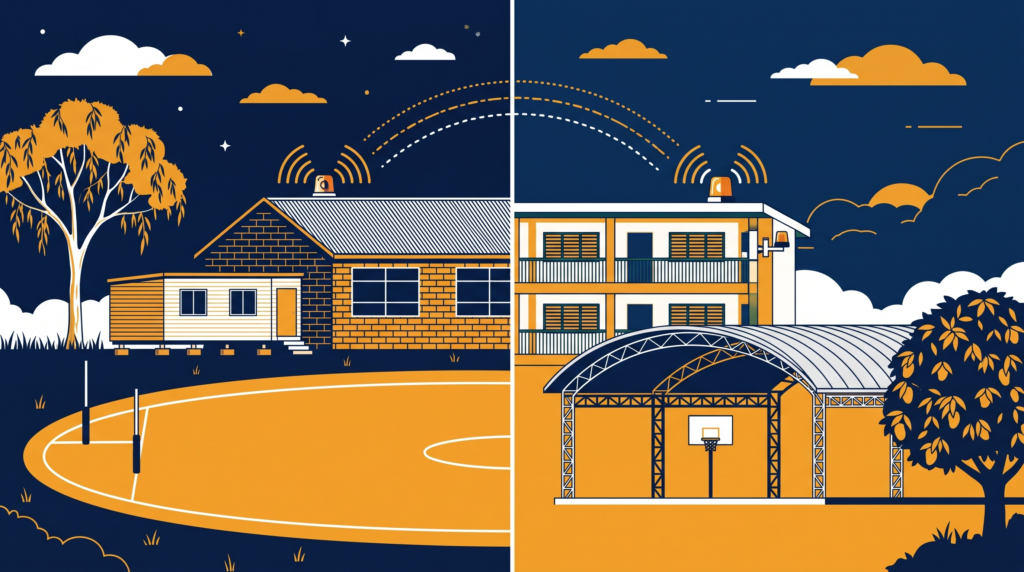
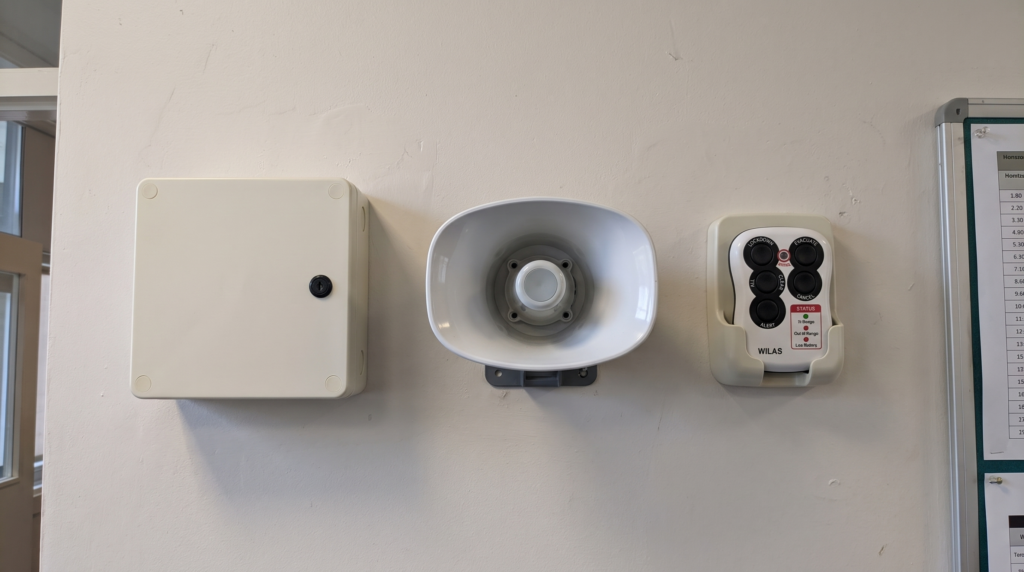
Hazavoid’s Wireless Emergency Alert System (WiLAS) was designed in Australia for the alerting parts of a layered plan. It gives distinct Lockdown, Evacuation and All Clear alerts, with tones and voice-overs you can customise.
Outdoor sirens cover the campus perimeter. Meanwhile, indoor speakers and colour-coded strobe beacons cover buildings and classrooms. Staff can trigger alerts from wall-mounted points or handheld remotes anywhere on site.
Each unit runs on battery, with mains or solar charging. There’s no central control panel, so there’s no single point of failure. The system can also link to existing fire control panels, in line with Lesson 3.
Next step: map your school against the layers
You don’t need to adopt the PASS school safety guidelines to learn from them. First, download the free guidelines and checklist from passk12.org. Then walk your campus one layer at a time and ask: if something happened here right now, how would everyone know?
If alerts are the gap, the Hazavoid team can help you plan coverage across every layer. Book a free site assessment, email support@hazavoid.com or call 1300 003 339.
Frequently Asked Questions
What are the PASS school safety guidelines?
The PASS Safety and Security Guidelines for K-12 Schools are free, vendor-neutral recommendations from the Partner Alliance for Safer Schools in the United States. They organise school safety into five layers and four tiers. The 7th edition was released in 2025.
What are the five PASS layers?
District-wide, digital infrastructure, campus perimeter, building perimeter, and classroom and interior.
What does Tier 1 mean in PASS?
Tier 1 is the baseline PASS recommends for every school, regardless of size, location or budget. Higher tiers add more capability and are phased in based on risk and funding.
Can Australian or Philippine schools use the PASS guidelines?
Yes, as a planning reference. PASS is written for US schools and does not replace Australian state and sector requirements or DepEd policy. Its layers and checklist are still a useful way to structure a safety review.
Where do emergency alerts fit in PASS?
Alerts appear across several layers, from panic alarms in each building and classroom at Tier 1 to campus-wide audible and visual notification at higher tiers. PASS also recommends unifying fire and panic alarm systems.
Does PASS recommend specific products?
No. PASS is vendor-neutral and aims to help schools separate necessary solutions from sales pitches.